
How to Answer 'Why Should We Hire You?'
Key Takeaways
- The strongest why should we hire you answer leads with the employer's needs, not your own hopes and achievements. It's a shift in perspective, not just a list of strengths.
- The most useful framework for this question comes from organizational psychologist Gena Cox: address a problem the employer hasn't stated out loud but that you've picked up on, then explain the benefit of hiring you to solve it.
- Aim for 30 to 90 seconds, built around two or three qualities matched directly to the role, each backed by a real example.
"Why should we hire you?" feels like a trap because it invites you to either brag or ramble. It's neither. It's an invitation to make the interviewer's decision easier by connecting what you can do to what they actually need, and that's a very learnable skill. Once you see that shift, building a why should we hire you answer that actually lands stops feeling like guesswork.
What This Question Is Actually Testing
This question tests whether you understand the role well enough to explain, specifically, why you're the right fit for it rather than a generically good candidate. Interviewers aren't looking for confidence alone. They're checking whether you've thought about their actual problem, not just your own qualifications.
The Real Shift: Solve Their Unstated Problem, Not Just List Your Strengths
Here's the reframe that separates a forgettable answer from a memorable one: this isn't "why do you deserve this job," it's "what will hiring you actually fix for them." Most candidates answer the first question. The strongest answers address the second.
Organizational psychologist Gena Cox, founder of the consultancy Feels Human LLC, puts it directly: the best answer should address a problem the employer hasn't articulated but that the candidate has perceived, and only then talk about the benefit the candidate will get from being hired. In other words, lead with their gap, not your résumé.
Leadership consultant Bill Catlette of Contented Cow Partners frames it as finding the overlap between what the business needs and how you actually work. His example: "My impression is that you've got a very labor-dependent business that requires high reliability. That's very much in sync with how I approach my job." Notice what that sentence does. It names something specific about the business first, then connects it to a trait, instead of opening with the trait and hoping it lands.
To use this yourself, look for signals in the job posting and the conversation so far: a phrase repeated more than once, a pain point the interviewer mentioned in passing, a gap you can infer from the team's current structure. Naming that gap, even tentatively, does more work than any adjective you could use to describe yourself.
How to Structure Your Answer
A simple three-part structure keeps you from either rambling or freezing:
- Name what they need. State, in a sentence, what you believe the role requires, based on the posting or the conversation so far
- Prove you can deliver it. Back that up with one specific, ideally quantified accomplishment from your own background
- Connect it forward. Close with a short line on how that same strength applies directly to this role
A simple formula version of this: "You need someone who can [need]. In my last role, I [specific result]. I'd bring that same approach to [this role]."
When coaching clients through interview prep, the answers that land well almost always follow this shape, not because it's a script to memorize, but because it forces the two things an interviewer actually needs to hear: relevance and proof.
Why Should We Hire You? Examples by Experience Level
The right answer depends heavily on how much relevant experience you're working with. Here's the same structure applied across a few common situations.
Entry-level or recent graduate: "From what I understand, you need someone who can manage social content without a lot of hand-holding early on. During my internship, I built a content calendar from scratch and grew our Instagram engagement by 30% over three months. I'm confident I can bring that same initiative here from day one."
Career changer: "I know this role calls for someone who can keep a project on track across multiple teams. That's essentially what I did for six years as a teacher, coordinating school-wide initiatives, managing stakeholders, and hitting hard deadlines. I've since completed a project management certification, and I'm ready to apply that same coordination skill in a new industry."
Experienced professional: "It sounds like retention is a priority for this team right now. In my current role, I identified a gap in our onboarding process and rebuilt it, which cut new-hire turnover by 18% within a year. I'd bring that same instinct for spotting and fixing structural gaps to your team."
Each version follows the same shape: name the need, prove it with a real result, connect it to the role. Only the evidence changes.
How Long Should Your Answer Be?
Most guidance on this converges around a similar range: somewhere between 30 seconds and two minutes, with a practical sweet spot around 60 to 90 seconds. Long enough to include one real example, short enough that you don't lose the interviewer's attention or start repeating yourself.
If you're not sure where you land, time yourself saying your answer out loud. If it runs past two minutes, you're probably including more than one accomplishment or restating your résumé. Cut it back to your single strongest match.
What to Avoid
A few habits consistently weaken this answer, even when the underlying experience is strong:
- Restating your résumé. The interviewer already has it (and a tailored resume already makes the case on paper). Use this answer to explain why what's on it matters for this specific role
- Generic claims with no proof. "I'm a hard worker" or "I'm a team player" says nothing without a specific example attached
- Overselling. Confidence is good, but "I'm the best candidate you'll find" without evidence to back it up tends to read as arrogance rather than strength
- Mentioning money, benefits, or personal need. Saying "because I need this job" or referencing salary and perks shifts the focus back to you, which undercuts the whole point of the answer
- Saying "I don't know." Even a short, honest answer beats no answer at all
Quick Tips
- Research the job posting and company beforehand so you have something specific to point to, not just general enthusiasm
- Write down two or three qualities that genuinely match the role, and one real example for each, before the interview
- Practice saying your answer out loud rather than memorizing it word for word. It should sound natural, not recited
- If you freeze, it's fine to say, "That's a great question, let me take a second to think it through." A brief pause reads as thoughtful, not unprepared
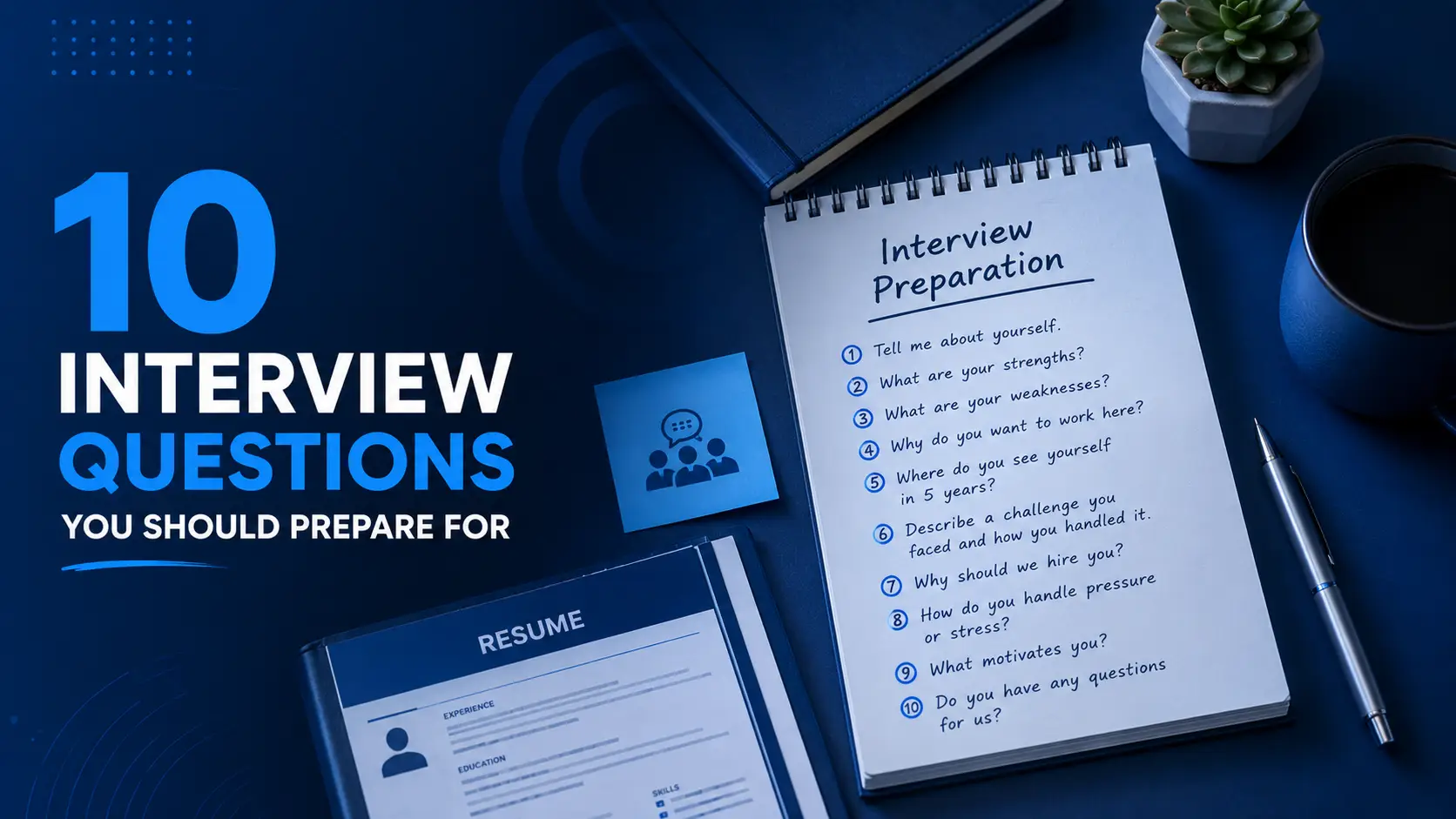
- For help translating a specific accomplishment into this kind of answer, our guide to the 10 interview questions you should prepare for walks through the structure in more depth
Frequently Asked Questions
How long should my answer to "why should we hire you" be?
Aim for roughly 30 to 90 seconds. That's enough time to name the role's need, back it up with one specific example, and connect it forward, without repeating your résumé or losing the interviewer's attention.
What if I don't have much relevant experience?
Focus on transferable skills from school, internships, volunteer work, or part-time jobs, and be explicit about how they connect to what the role needs. Employers asking this question are often screening for potential and initiative just as much as direct experience.
What if I can't figure out what the employer's unstated problem is?
Look for clues: language repeated in the job posting, something the interviewer mentioned offhand, or a gap you can reasonably infer from how the team or role is structured. If nothing specific stands out, fall back on directly matching your strongest, most relevant skill to the role's stated requirements instead of guessing at a problem that isn't there.
Is it okay to mention that I really need this job?
It's best to leave that out of this specific answer. The interviewer isn't asking what you'll gain from the role, they're asking what they'll gain from hiring you, so keeping the focus on the value you bring tends to land better than framing built around your own need.
Should I bring up salary or benefits in my answer?
No, save those topics for later in the process. Mentioning compensation or perks here shifts the focus away from your value to the company and can make the answer feel more about you than about them.
What if I freeze up when asked this question?
Take a breath and ask for a moment to think, that's a completely normal and reasonable request. Even a shorter, simpler answer built around one clear example is stronger than silence or a rambling response with no real point.
Once your answer is ready, it's worth making sure the resume backing it up is in equally good shape. Our free ATS Resume Checker flags formatting and keyword issues in minutes, and if you'd rather have a professional handle the rewrite, our resume writing service can take it from there.